About
Practice
The practice is private and independent, sustained over fifteen years. It has consistently pursued a rigorous, minimalistic approach, favouring clarity of form and the disciplined reduction of visual elements. Earlier work explored what has been termed Air Drawing describes a mode in which gestures are rendered with utmost restraint, lines barely touching the support, producing an effect of aerial presence and weightless structure. The current approach combines this minimalism with classical drawing techniques, creating a tension between reduction and measured representation. This continuity is a dedicated commitment to investigating shades of human with both precision and subtle interpretive restraint.
Subject
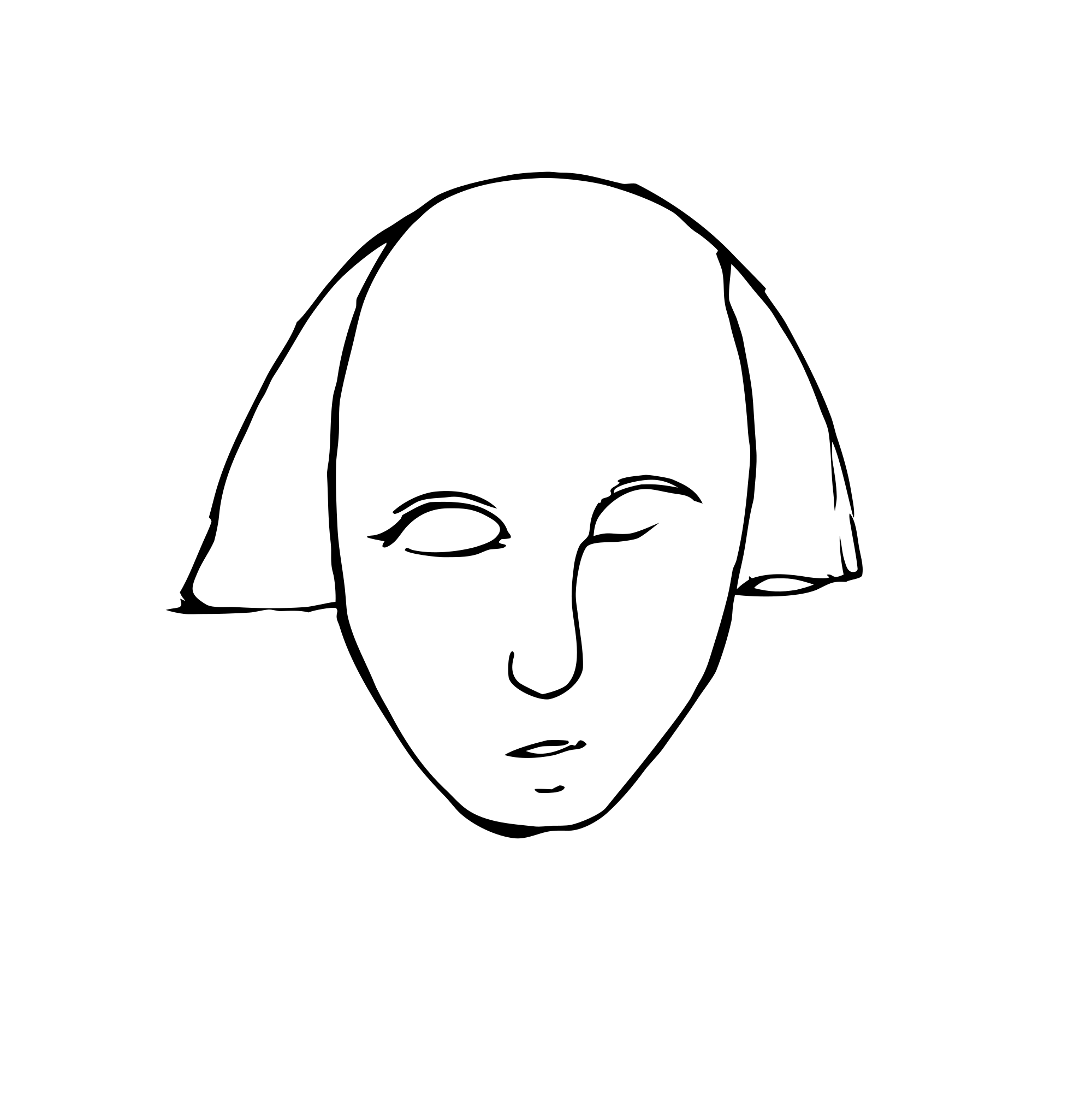
Work is largely devoted to the human visage, approached with observation and attention. Portraits emphasise subtle variation as well as expression, examining the thresholds between presence and absence. Drawings alternate between figures rendered without eyes and those with eyes inscribed through a minimalist approach, suggesting both anonymity and introspection. Aside from the collection Wolf, which departs in focus, works predominantly engage with femininity. The selection and depiction of subjects are governed by deliberate moderation, prioritising compositional balance and the articulation of physiognomy over dramatic narrative.
Medium
Drawings are executed primarily in pencil on a selection of papers chosen for their particular interactions with the mark. Canvas paper provides the strongest texture, introducing pronounced resistance that shapes the line and produces a subtle granularity; watercolor paper offers a medium strength of texture, allowing for controlled tonal transitions; soft paper affords the smoothest surface, facilitating delicate gradations and near-erasure effects. The choice of support introduces texture and a measured resistance to mark-making. Pigment is applied carressingly in a diffused manner, solely to lend warmth without dominating the composition. The precise formulation of the pigment is not disclosed. Each combination of support, graphite, and pigment is selected to reinforce the study of presence, absence, and the development of form, practicing a lineage of draughtsmanship sensitive to both material and method.
1914 translation by H. Rackham: "On the other hand, we denounce with righteous indignation and dislike men who are so beguiled and demoralized by the charms of pleasure of the moment..."
Presentation
Selected works are offered for acquisition in the Salon, with earlier pieces recorded in catalogues and recent works circulated discreetly through limited channels. The presentation of the work is administered by discretion and measured availability, accounting for both the private nature of the practice and the considered engagement of collectors. The works are being held open for the first time. This first public opening represents a considered release of a body of work long held in private reserve, extending access beyond its traditionally restricted and closely maintained confines. The decision to hold the works open for the first time marks a notable departure from the longstanding privacy of the practice, allowing material that has historically remained within a closed sphere to enter public view under measured conditions.